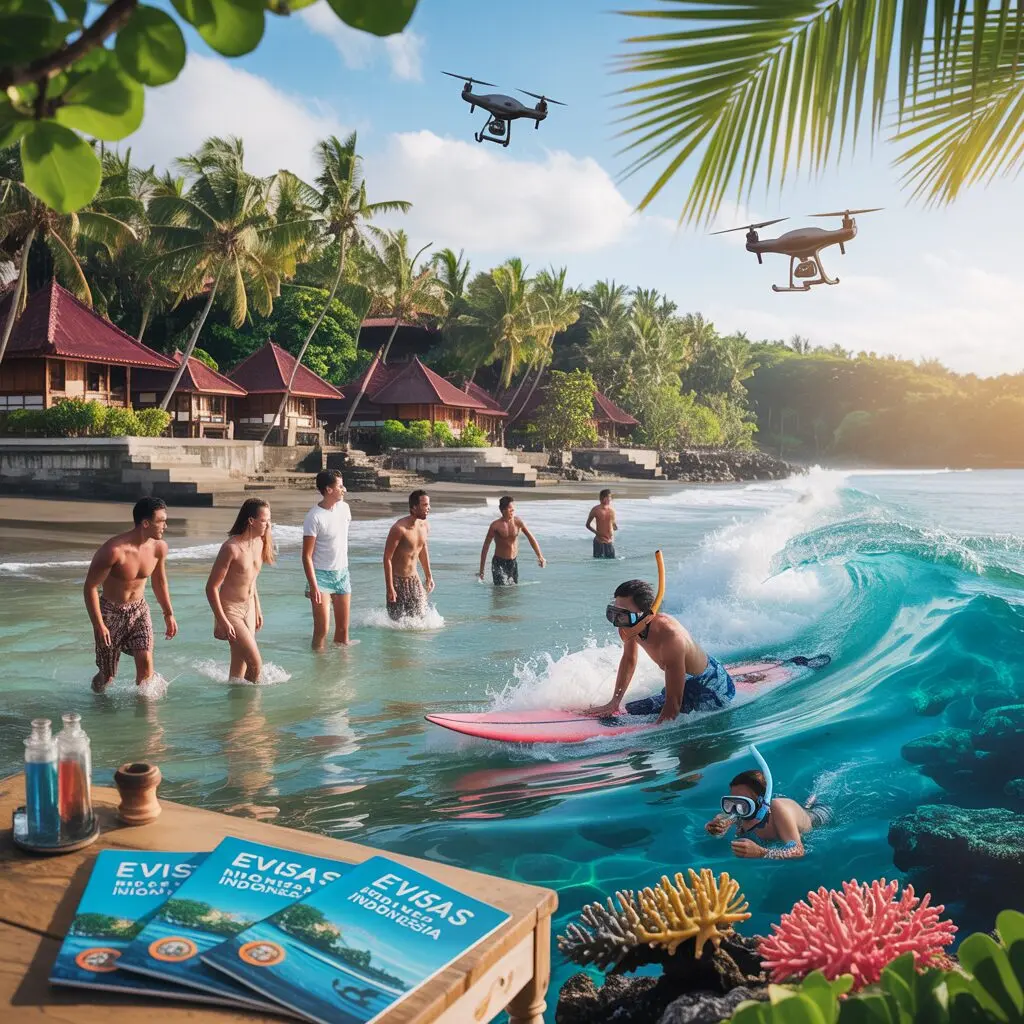
Indonesia welcomed over 14 million international tourists in recent years, and the e-VOA has made the entry process smoother than ever. From Bali’s temples to Komodo’s dragons, from Jakarta’s urban energy to Raja Ampat’s underwater paradise — your Indonesian adventure starts with the right visa.
This guide covers everything tourists need to know about the Indonesia e-VOA in 2026.
What is the Tourist e-VOA?
The tourist e-VOA is the electronic Visa on Arrival that covers tourism purposes. Officially classified as a B1 Visitor Visa, it allows you to enter Indonesia for sightseeing, beach holidays, cultural exploration, and recreational activities.
Key details:
- Duration: 30 days, extendable once to 60 days
- Cost: IDR 500,000 (~USD 30)
- Type: Single entry
- Application: Online at evisa.imigrasi.go.id
- Eligible nationalities: 97 countries
Top Destinations for Tourists
Bali
The Island of the Gods remains Indonesia’s most popular destination. Highlights include:
- Ubud: Rice terraces, monkey forest, art galleries
- Seminyak/Canggu: Beaches, surfing, nightlife, restaurants
- Uluwatu: Clifftop temple, world-class surf breaks
- Nusa Penida: Dramatic cliffs, manta rays, crystal-clear water
- Mount Batur: Sunrise trek over an active volcano
Airport: Ngurah Rai International Airport (DPS)
Yogyakarta
The cultural heart of Java:
- Borobudur: The world’s largest Buddhist temple (UNESCO World Heritage)
- Prambanan: Stunning Hindu temple complex
- Malioboro Street: Shopping, street food, batik
- Mount Merapi: Volcano trekking
Airport: Yogyakarta International Airport (YIA)
Komodo
Home to the legendary Komodo dragon:
- Komodo National Park: UNESCO World Heritage site
- Pink Beach: One of only a handful of pink sand beaches in the world
- Diving: World-class dive sites at Batu Bolong, Manta Point
- Rinca Island: Alternative dragon viewing with fewer crowds
Airport: Komodo Airport, Labuan Bajo (LBJ)
Raja Ampat
A diver’s paradise in West Papua:
- Marine biodiversity: The most biodiverse marine area on Earth
- Diving and snorkeling: Manta rays, reef sharks, thousands of fish species
- Island hopping: Kayaking through karst limestone islands
- Homestays: Authentic local accommodation
Airport: Domine Eduard Osok Airport, Sorong (SOQ)
Jakarta
Indonesia’s sprawling capital:
- National Monument (Monas): Iconic landmark
- Kota Tua: Historic Old Town with Dutch colonial architecture
- Thousand Islands (Pulau Seribu): Quick island getaway from the city
- Street food: Nasi goreng, satay, gado-gado
Airport: Soekarno-Hatta International Airport (CGK)
Lombok
Bali’s quieter neighbor:
- Mount Rinjani: Indonesia’s second-highest volcano, multi-day trek
- Gili Islands: Car-free islands with incredible snorkeling
- Kuta Lombok: Beautiful beaches without the crowds
- Sasak culture: Traditional villages and weaving
Airport: Lombok International Airport (LOP)
Planning Your Trip
Best Time to Visit
Indonesia has two seasons:
Dry season (April-October):
- Best weather for outdoor activities
- Peak tourist season (higher prices, more crowds)
- Ideal for diving, hiking, and beach holidays
Wet season (November-March):
- Afternoon rain showers (usually short)
- Fewer tourists, lower prices
- Green landscapes, lush rice terraces
- Some areas may have flooding
Shoulder months (April-May, September-October):
- Good weather with fewer crowds
- Best balance of price and conditions
Budget Planning
Approximate daily costs for tourists in Indonesia:
| Category | Budget | Mid-Range | Luxury |
|---|---|---|---|
| Accommodation | $10-20 | $40-100 | $150-500+ |
| Food | $5-10 | $15-30 | $50-100+ |
| Transport | $5-10 | $15-30 | $50-100+ |
| Activities | $10-20 | $30-60 | $100-300+ |
| Daily Total | $30-60 | $100-220 | $350-1000+ |
Plus your e-VOA fee (IDR 500,000 / ~USD 30) and extension fee if staying over 30 days.
Health and Safety
- Vaccinations: No mandatory vaccinations for most nationalities, but Hepatitis A, Typhoid, and Tetanus are recommended
- Travel insurance: Strongly recommended — medical evacuation can cost tens of thousands of dollars
- Water: Drink bottled or filtered water only
- Mosquitoes: Use repellent, especially in rural areas (dengue risk)
- Sun protection: Indonesia is near the equator — strong UV year-round
Electronic Customs Declaration
All travelers entering Indonesia must complete an Electronic Customs Declaration (ECD):
1. Visit the official customs website before arrival
2. Fill in your personal and travel details
3. Declare any items exceeding duty-free limits
4. Submit and save the QR code
5. Present the QR code at the customs counter upon arrival
Duty-free limits:
- 200 cigarettes or 25 cigars or 100g of tobacco
- 1 liter of alcohol
- Reasonable quantity of personal items
- Gifts up to USD 500 value
Getting Around Indonesia
Domestic Flights
Indonesia is an archipelago — most inter-island travel requires flights:
- Garuda Indonesia: Full-service national carrier
- Lion Air: Budget carrier with extensive network
- AirAsia: Low-cost international and domestic
- Batik Air: Mid-range carrier
- Citilink: Budget subsidiary of Garuda
Book domestic flights in advance for the best prices, especially during peak season.
Ferries
- Pelni: State-owned ferry company covering major routes
- Fast boats: Bali to Lombok, Gili Islands, Nusa Penida
- Local ferries: Inter-island connections
Land Transport
- Grab: Southeast Asia’s ride-hailing app (works in major Indonesian cities)
- Gojek: Indonesian super-app for rides, food delivery, and services
- Rent a scooter: Popular in Bali and Lombok (international driving permit recommended)
- Private driver: Affordable option for day trips (IDR 500,000-800,000 per day)
Frequently Asked Questions
Is Bali safe for tourists?
Bali is generally very safe for tourists. Petty theft (bag snatching, pickpocketing) can occur in crowded areas. Exercise normal precautions, avoid leaving valuables unattended on the beach, and use hotel safes. Traffic can be chaotic — be cautious if renting a scooter.
Do I need a visa for a short layover in Indonesia?
If you are transiting through an Indonesian airport without passing through immigration, you may not need a visa. If you want to leave the airport during a layover, you need an e-VOA or VOA.
Can I visit multiple Indonesian islands on one e-VOA?
Yes. The e-VOA allows travel throughout Indonesia. There are no restrictions on inter-island travel for foreign tourists. You can fly from Bali to Yogyakarta to Komodo on the same visa.
What currency should I bring?
The Indonesian Rupiah (IDR) is the local currency. ATMs are widely available in cities and tourist areas. Credit cards are accepted at hotels, restaurants, and larger shops. Carry cash for small vendors, markets, and rural areas. USD can be exchanged at money changers.
Is English widely spoken?
English is spoken in tourist areas, hotels, and by younger Indonesians. In rural areas, English may be limited. Learning a few Indonesian phrases (terima kasih = thank you, selamat pagi = good morning) goes a long way.
What should I pack for Indonesia?
Light, breathable clothing. Modest clothing for temple visits (sarong and sash are often provided or available for rent). Rain jacket (even in dry season). Reef-safe sunscreen. Insect repellent. Universal power adapter (Indonesia uses Type C and F plugs). Comfortable walking shoes.